
Imagine This
Musical (2008) - Flop
Inspiration historique: Siège du Ghetto de Varsovie
Shuki Levy, David Goldsmith et Glenn Berenbeim créent un musical original dans lequel une troupe juive du ghetto de Varsovie joue l’histoire du siège de Massada.
Israeli composer Levy had long nurtured an interest in writing a show about the siege at Masada around 70 CE. He took the music that he had written for the subject to television writer Berenbeim, who resisted the idea, particularly the mass suicide ending of the historical story. But then he decided that the story could work as a play-within-a-play about actors in the Warsaw Ghetto. He told The Times, "I was suddenly interested in the story for its metaphorical value, not its robes and sandals."
Goldsmith joined the team, relishing the chance to write for the serious story.
After a tryout at the Theatre Royal in Plymouth in July 2007, the musical opened in the West End at the New London Theatre on 19 November 2008, following previews from 4 November 2008. It closed on 20 December 2008. Directed by Timothy Sheader, with choreography by Liam Steel, the cast featured Peter Polycarpou and Leila Benn Harris.
An Original London Cast Recording was released through Dress Circle in the UK. A DVD of the London production was also released.
The filmed version of the West End production aired throughout 2010 on PBS stations in over 40 markets in the United States, as part of their pledge drives and regular programming. It was broadcast with a panel discussion moderated by Neal Gabler, which included director Timothy Sheader, cast members Peter Polycarpou, Sarah Ingram and Roy Litvin, and Holocaust scholar Thane Rosenbaum.
En 1942, Daniel Warshowsky et sa troupe se réfugient dans un ancien dépôt de trains du ghetto de Varsovie. Ils jouent la résistance de Massada aux Romains. Rebecca interprète Tamar et Adam, un résistant, joue le commandant romain Silva. Lorsque la déportation menace, la décision que les assiégés doivent prendre dans la pièce renvoie les comédiens à leur propre situation. La répétition et la représentation permettent à Daniel et à sa troupe de transmettre leur mémoire et d’affirmer leur dignité au moment où leur destin se referme.
Afficher le synopsis détaillé
Synopsis détaillé:
The Setting: Warsaw, Poland | The Time: 31 August 1939 - Late Winter 1942
ACT I
IMAGINE THIS opens on a dark stage, lit only by a “ghost light”. A halo of light reveals a toy carousel and REBECCA WARSHOWSKY as she remembers life before the war. Darkness turns to daylight and Rebecca’s family appears: her father, DANIEL WARSHOWSKY, the charismatic head of a Polish theatre company; her mother, Daniel’s wife and leading lady, HANNAH; Rebecca’s 10 year old brother, LEON; the comic acting duo of Daniel’s sister SARAH and her husband MAX; and Rebecca’s grandfather, Daniel and Sarah’s father, ADOLPH, a renowned Shakespearean actor. What a glorious day it was, that last day of Summer, August 31st, 1939 before the Nazis invaded Poland on September 1st of that year.
Fast forward two and a half years to the ghetto in Warsaw. Daniel and his family along with 450,000 other Polish Jews have been imprisoned behind stone walls topped by barbed wire. In the abandoned train depot where the Warshowsky family had taken refuge after their theatre was bombed, they and the other cold and hungry members of the acting company – IZZY, a comic from Berlin; OTTO, a German film actor; LOLA, a chorus girl; JAN, the son of a Rabbi; and JACOB, a young Polish actor – prepare to rehearse. Daniel has written a musical about Masada, the ancient Judean mountain where 980 rebels held 10,000 Roman soldiers at bay – a story to inspire his audiences.
ADAM, a resistance fighter, suddenly bursts into the building, looking to escape from the Nazis chasing him. Daniel quickly hides Adam’s gun and instructs him to pretend to be one of the actors. When CAPTAIN BLICK and his soldiers enter to search the premises and discover Jacob removing Adam’s gun from from where is had been hidden, BLICK has Jacob arrested. Adam has no choice but to keep up the subterfuge if he’s not to betray the Warshowskys for giving him shelter. So after Jacob is dragged away Adam is forced to play the leading part opposite Rebecca.
As they begin to rehearse, they find that one thing on which they can agree is there’s no place for love in a world like theirs. However, as the days go by leading up to opening night, both young people start to experience a strong attraction to each other.
The moment approaches for Daniel’s show to start. The actors are preparing while Adam argues with Daniel that it’s pointless to put on plays while the Nazis are bent on destroying them. Rebecca shares Adam’s disillusionment. She says they’re just playing into the Nazis’ hands, keeping the ghetto entertained while everyone starves to death. Daniel argues that they can still feed the souls of their ghetto audience with hope. As the curtain rises on Daniel’s play of “Masada”, he addresses his ghetto audience, asking them to see more than bare floorboards and starving actors, to close their ears to those who say they can’t survive, to come with him on a journey two thousand years ago…
Jerusalem 70 A.D.
A courageous band of rebels led by the freedom fighter ELEAZAR (played by Daniel) makes their way to King Herod’s former fortress, a desert mountain known as Masada, created onstage by the members of Daniel’s acting company with tables, chairs, ironing boards and all manner of found objects. As they arrive on the “mountain” a celebration breaks out, TAMAR (played by Rebecca) dreams of the handsome Roman General SILVA (played by Adam) she had met in the Jerusalem marketplace. Although the connection between them, as they gazed into each others eyes, was electrifying, no love is possible between a Jewish girl and a Roman General and so she watched him depart, with only a white rose to remember her by.
At the same time Silva, in Rome, receives orders from CAESAR (played by Adolph) to go back into battle and capture the rebels. Silva had returned to Rome expecting to be hailed as a conquering hero, allowed to retire from war. Upon receiving Caesar’s directive, Silva realizes he’s nothing but a slave at the mercy of a tyrant, all the while dreaming of the beautiful girl in Jerusalem.
Silva discovers that a palace slave, POMPEY (played by Izzy), has overheard his blasphemous diatribe. Silva draws his dagger and POMPEY begs for his life. Moved, Silva spares his life and agrees to take Pompey with him to Masada as his personal slave.
When Silva’s army surrounds the mountain to demand surrender, Eleazar refuses. On their mountain fortress, the rebels are safe from Roman attack. Silva, in his tent, despairs that he is losing the confidence of his men. RUFUS (played by Otto), Caesar’s Tribune in Judea, arrives and conveys Caesar’s order that Silva build a gigantic ramp from the desert floor to the summit of Masada along with a battering ram that can knock down the walls. Little does he suspect that the girl from the Jerusalem marketplace is up on the mountain at that very moment.
When Eleazar returns from a raid on the Roman camp with the news that one of the rebels, AARON (played by Jan), has been captured, Tamar’s pain and anger are unleashed and she grabs a dagger and heads down the mountain path toward the Roman camp.
At the encampment, Rufus discovers that Pompey is a hidden Christian and informs Silva that the slave must be crucified. Pompey refuses to deny his faith, despite the General’s pleas, and is dragged away. Silva decides to return him to Rome and allow Caesar to decide the slave’s fate.
That night, Silva sits alone in his tent, making final plans for the massacre of Masada. A figure flies out from behind a tent curtain, dagger raised high. Silva wrests it away, unmasking the robes to reveal Tamar. He stares, shocked to see she’s the one who meant to take his life. She stares, equally shocked, waiting for him to kill her – but he can’t. As Silva takes her in his arms and they kiss, the Nazi Captain, Blick, interrupts the performance. He addresses the ghetto audience, “Friends, your hunger is at an end. You may leave the ghetto tomorrow morning. A new life awaits you in the east where we Germans have built a beautiful new labor camp. You will each be allowed to take one suitcase. And as a bonus, all who cooperate will receive one loaf of bread and a jar of marmalade.” As the headlight of a train approaches and the whistle blows, Act I comes to an end.
ACT II
Backstage, the actors are excited to leave for the labor camp at Treblinka. Rebecca believes they will find her missing mother there, that the family will be reunited. Adam desperately attempts to make them all listen to the truth – that Treblinka is a death camp and getting on the train, a death sentence. An angry Captain Blick arrives with his soldiers. Having discovered, from an informer, Adam’s real identity, he informs Daniel that he and Adam are under arrest and that the rest of the company will be on the trains in the morning, on a ride from which they’ll never return.
Unless…
If Daniel and the others will finish the play, if they help Blick to keep the audience calm so they unsuspectingly board the trains the next day, in return Blick will spare Daniel and his family. As Blick departs, the actors turn to Daniel in desperation – do they continue the performance and save themselves without telling the audience what they know? Can they let thousands of others get on the trains and die? Without giving them an answer, Daniel orders everyone back on stage and the performance resumes as we return to the play of “Masada”.
Back in Silva’s tent, Tamar is full of remorse. Caught between two worlds, her only hope is a peace that seems impossible. Motivated by love, for Silva as well as her people, she heads back up the mountain to arrange a meeting between her father and the man she loves. At the same time, Rufus is determined to destroy the chance of an agreement between Silva and Eleazar and encourages an insurrection against Silva by the Roman troops.
When Tamar returns to Masada, she swears Silva will protect everyone if they will surrender peacefully. Eleazar says it’s a trick. But when Silva spares Aaron’s life and frees him, Eleazar agrees to meet with the General. Eleazar arrives at the meeting in time to hear Tamar and Silva pledge their love. Silva swears he’ll protect Tamar – and her people. Eleazar can’t help being moved. But just when peace appears to be at hand, Silva is betrayed by Rufus’s officers, determined to sack Masada and kill Silva. He and Eleazar fight them off but, in the end, Eleazar realizes that Silva’s love for his daughter isn’t enough to save them from Roman tyranny.
Eleazar retreats back up the mountain. He tells the rebels they have a choice – to live as slaves or die in freedom. The next morning, after the Romans attack, Silva enters the fortress to discover an eerie silence. The rebels have killed themselves. Silva sees Tamar lying dead next to her father. Thus ends the tale of “Masada”.
However the fate of Daniel, his family and his acting company is still unknown: will they save themselves or find a way to inform their audience not to get on the trains?
Principales productions de l'oeuvre
Après Plymouth en 2007, la production officielle ouvre au New London en novembre 2008. La captation fait connaître le spectacle en dehors de cette courte série.
Adaptations à l'écran
Captation de scène tournée au New London et présentée à la télévision américaine.
Principale récompenses
Aucune récompense majeure attestée pour la création.
Enregistrements de références
DVD et CD publiés à partir de la production londonienne enregistrée.
In spite of several four-star reviews, including the Sunday Telegraph ("A Triumph" "I adore this show" "4-stars"), the London Paper ("A mesmerising journey"), London Lite ("Bursting with drama" - 4 stars), Spoonfed.co.uk ("It must be rated a triumph"), The West End Whingers ("We were humming the tunes the next day. Extraordinary") and others, the musical closed after two weeks of previews and a month of regular performances upon receiving generally poor reviews from the mainstream British critics, with "many papers attacking it for trivializing the Holocaust".[3] The press questioned whether, during the current economic woes, audiences want to see such a dark story. Echoing a number of the reviews, a writer in The Guardian criticized the "cavalier" treatment of the subject and contended that critics were right to question whether "the Holocaust was being co-opted to legitimise and lend cachet to deficient art."
However, some of those critics, namely Norman Lebrecht, reviewed the musical without ever having seen it, getting on the radio and boasting as much in a radio interview with producer Beth Trachtenberg. Its proximity in opening a mere six weeks after the global economic crisis of 2008 no doubt played its role as well in posting its early notice.
Ultimately some redemption did arrive for the show with the announcement of the season's What's On Stage Theatregoer's Awards, for which Imagine This received four nominations, those for Best Scenic Design (Eugene Lee), Best Supporting Actor (Michael Matus), Best Actress (Leila Benn Harris) and Best Musical (Glenn Berenbeim, Shuki Levy, and David Goldsmith).
1 Imagine This peut-être considéré comme un Flop musical
2 Imagine This s'intéresse à un événement historique important: Siège du Ghetto de Varsovie.
Période(s) à laquelle se déroule l'intrigue
Varsovie de 1939 à 1942 et Judée romaine autour du siège de Massada.
Lieu(x) où se déroule l'intrigue
Un dépôt dans le ghetto de Varsovie, Jérusalem, la forteresse de Massada et le palais impérial de Rome.
Thèmes principaux de l'oeuvre
Mémoire, résistance, amour, liberté et sens du jeu en période de persécution.
Structure dramaturgique
Les acteurs réapparaissent dans les rôles antiques qu’ils interprètent. Les deux récits convergent au moment du choix final.
Structures des numéros musicaux notables
Imagine This encadre le spectacle. Free se reprend dans les scènes de résistance. Far From Here, Far From Now est le duo de Tamar et Silva.
Contexte historique de la création
Le livret réunit deux épisodes historiques éloignés et confie leur rapprochement à des personnages fictifs.
Réception et presse à la création
Plusieurs critiques jugent l’écriture musicale inadéquate au sujet. D’autres distinguent des airs et l’interprétation de Peter Polycarpou.
Importance dans l'histoire des musicals
La production s’inscrit parmi les créations londoniennes de la période qui tentent une grande forme musicale à partir d’un sujet historique difficile.
Caractéristiques stylistiques
Mouvements collectifs, musique orchestrale et dédoublement des interprètes règlent les passages d’un récit à l’autre.
Prologue – Varsovie, 1939–1942
The Last Day of Summer — Rebecca, Daniel et troupe
Acte I
Imagine This — Daniel et troupe
Masada Prologue — Rebelles
Rufus’s Letter to Caesar — Rufus
Free (Jerusalem Sequence) — Rebelles
When He Looked in My Eyes — Tamar
Salome’s Lament — Salomé, esclaves et soldats romains
When I Looked in Her Eyes — Silva
No More — Pompey
Free (reprise) — Rebelles
Rebels’ Prayer — Tamar, Naomi et rebelles
Masada — Eleazar, Tamar et rebelles
Hail — Silva, Tamar et soldats romains
I Am the Dove — Naomi et Tamar
Hail (reprise) — Silva
Far From Here, Far From Now — Silva et Tamar
Acte II
To Touch a Cloud — Daniel et troupe
The Last Laugh — Daniel
Don’t Mind Me — Pompey et Aaron
Writing on the Wall — Rufus et soldats romains
I Surrender — Tamar, Silva et Eleazar
Far From Here, Far From Now (reprise) — Tamar
Passover Prayer — Jeremiah et rebelles
The Choice — Eleazar, Tamar, Naomi et rebelles
To Touch a Cloud (reprise) — Troupe
Imagine This (finale) — Troupe
Aucun dossier informatif complémentaire concernant Imagine This
Aucun dossier informatif complémentaire concernant Imagine This
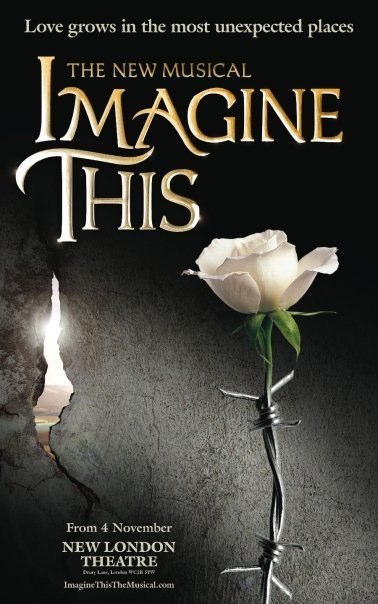
Théâtre: Gillian Lynne Theatre (Londres - Angleterre)
Durée : 1 mois Nombre : 15 previews - 37 représentationsPremière Preview : 04 November 2008
Première: 19 November 2008
Dernière: 20 December 2008Mise en scène : Timothy Sheader i • Chorégraphie : Liam Steel i • Producteur : Star(s) : Avec: Peter Polycarpou (Daniel Warshowsky), Leila Benn-Harris (Rebecca), Simon Gleeson (Adam), Bernard Lloyd (Adolph) , Richard Cotton (Blick), Michael Matus (Izzy), Gary Milner (Otto), Steven Serlin (Jan), Sevan Stephan (Max), Sarah Ingram (Sarah), Cameron Leigh (Lola), Rachael Archer, Marc Antolin, Stuart Boother, Emily Jane Boyle, Oliver Brenin, Michael Camp, Joel Elferink, Bob Harms, Paul Iveson, Roy Litvin, Aoife Nally, Grant Neal, Darragh O'Leary, Vincent Pirillo, Philippa Stefani, Rebecca Sutherland, Carrie Sutton, Gemma Sutton, Lucy Thatcher, Michael WatsonCommentaires : De Plymouth au West End
Une première version est montée au Theatre Royal Plymouth en juillet 2007 avec Timothy Sheader et Adam Cooper. Sheader revient pour Londres. La chorégraphie et les mouvements sont cette fois de Liam Steel, avec décors d’Eugene Lee, costumes d’Ann Hould-Ward et orchestrations de Chris Walker. Peter Polycarpou et Leila Benn Harris jouent Daniel et Rebecca. Les mêmes interprètes passent du ghetto de Varsovie à la forteresse de Massada. Les changements d’espace et de rôle font apparaître les liens imaginés par Daniel entre la pièce et le présent.
La série et la captation
La production est filmée au New London avant sa clôture après environ un mois d’exploitation. La captation circule ensuite à la télévision et paraît en DVD et en CD, avec Peter Polycarpou, Leila Benn Harris et Simon Gleeson.Presse : Michael Billington (The Guardian) dit qu’on lui avait affirmé qu’un musical sur le ghetto de Varsovie était impossible et que la représentation l’a convaincu. Il ne doute pas des bonnes intentions, mais estime les talents réunis en deçà de la tâche. Benedict Nightingale (The Times) a d’abord cru que le livret de Glenn Berenbeim allait enflammer son imagination, avant de la voir éteinte par des banalités convenues qu’elle a repoussées mille fois. David Goldsmith ose faire rimer nature et nomenclature, mais verse aussi dans la sentimentalité. La partition de Shuki Levy sait se faire triste ou enjouée. Elle n’atteint jamais, pour lui, l’âpreté des tonalités mineures que réclame la situation. David Benedict (Variety) trouve que la tension affleure à peine malgré les bonnes intentions. Presque tout le monde connaît la fin, mais l’écriture schématique et prévisible suscite à peine une surprise. Le problème gagne la partition. Malgré une chanson qui revendique ironiquement un goût pour le sentimentalisme, les paroles de Goldsmith évitent largement cet écueil. Comme la musique du compositeur israélien Shuki Levy, elles manquent à ses yeux d’une étincelle personnelle. Nicholas de Jongh (Evening Standard) juge la pop douce d’une banalité offensante et la trouve à la remorque de paroles futiles et maladroites. Pour lui, musique et chansons ne rendent jamais justice au sujet terrifiant. Charles Spencer (Daily Telegraph) trouve la réalisation efficace malgré des moyens assez mesurés, et les interprètes impressionnants en l’absence de grandes vedettes. Il finit par juger le spectacle manipulateur et moralement douteux. Jen Dickson-Purdy (Official London Theatre) distingue notamment le duo Far From Here, Far From Now et le retour du titre Imagine This.
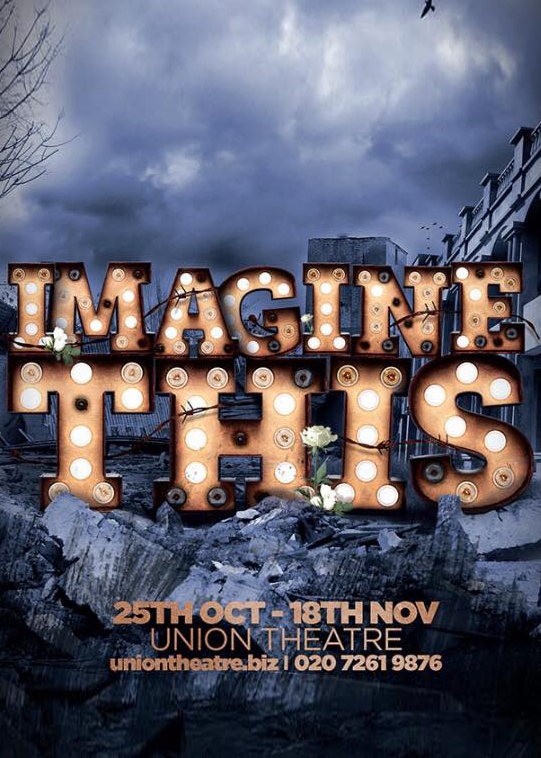
Théâtre: Union Theatre (Londres - Angleterre) Durée : 3 semaines Nombre : Première Preview : 25 October 2017
Première: 25 October 2017
Dernière: 18 November 2017Mise en scène : Harry Blumenau i • Chorégraphie : Producteur : Star(s) :
Pas encore de vidéo disponible pour ce spectacle