
Theatre Royal Drury Lane
Ville : Londres
Pays : Royaume-Uni
Adresse : 409–412 Strand, London WC2R 0NS
Localisation du théâtre
Infos complémentaires
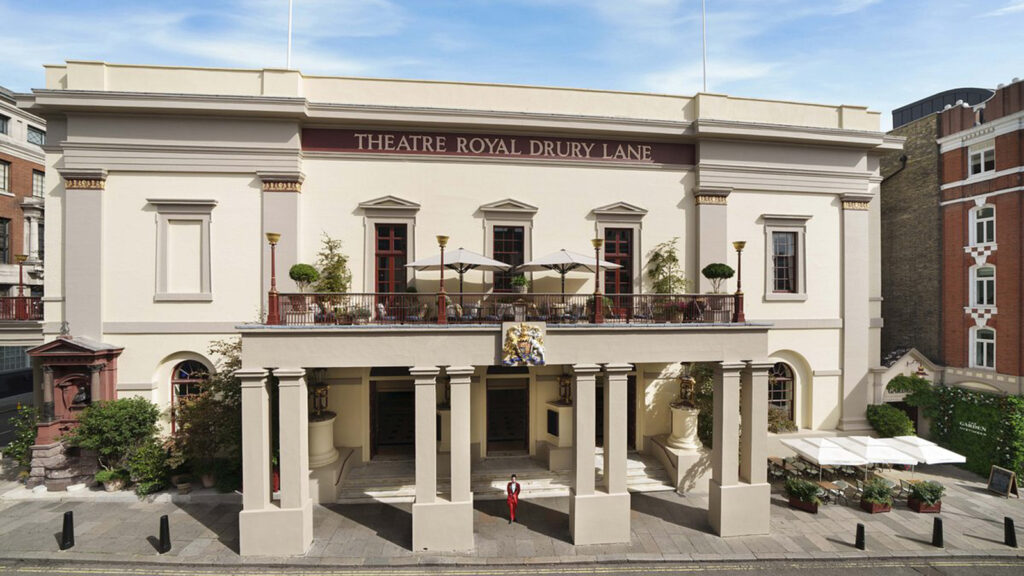
L’entrée principale donne sur Catherine Street, même si le nom du théâtre évoque Drury Lane, la rue située à l’arrière.
① Historique du théâtre
Le Theatre Royal Drury Lane, l’une des scènes les plus mythiques de Londres
Le Theatre Royal Drury Lane est l’un des lieux les plus prestigieux de l’histoire théâtrale britannique. Son aventure commence le 7 mai 1663, lorsque Thomas Killigrew ouvre, avec l’autorisation du roi Charles II, un premier théâtre sur ce site de Covent Garden. Détruit par un incendie en 1672, il est reconstruit dès 1674 et devient, notamment sous la direction de David Garrick, l’un des grands foyers du théâtre shakespearien. Un troisième bâtiment, conçu par Henry Holland, ouvre en 1794, mais disparaît à son tour dans les flammes en 1809. Le théâtre actuel, quatrième édifice construit à cet emplacement, est inauguré le 10 octobre 1812 sur les plans de Benjamin Dean Wyatt. Sa salle est profondément transformée en 1922, tandis que son extraordinaire machinerie permet d’accueillir des spectacles toujours plus ambitieux. Au XXème siècle, Drury Lane devient l’un des hauts lieux du grand musical londonien, accueillant notamment Oklahoma!, South Pacific, My Fair Lady, Miss Saigon et 42nd Street. Entre 2019 et 2021, une restauration spectaculaire de 60 millions de livres lui redonne toute sa splendeur géorgienne tout en modernisant les conditions d’accueil. Plus de trois siècles et demi après sa première ouverture, Drury Lane continue de conjuguer une histoire exceptionnelle et les grandes productions populaires de son temps.
Afficher l’historique détaillé
Plus de trois siècles et demi de théâtre au cœur de Londres
Il existe à Londres des théâtres prestigieux, des théâtres magnifiques et des théâtres chargés d’histoire. Le Theatre Royal Drury Lane possède cette particularité assez extraordinaire de réunir les trois. Depuis 1663, quatre bâtiments se sont succédé au même emplacement, au cœur de Covent Garden. Incendies, reconstructions, innovations scéniques et changements de goût n’ont jamais réussi à interrompre durablement une aventure qui accompagne presque toute l’histoire du théâtre britannique moderne.
1663–1672 — Un théâtre né du retour de la monarchie
Lorsque Charles II retrouve le trône d’Angleterre en 1660, le monde théâtral sort d’une longue période d’interdiction imposée sous le régime puritain. Le souverain accorde des patentes royales autorisant deux compagnies à présenter des pièces. L’une d’elles, la King’s Company, est dirigée par Thomas Killigrew, qui fait construire un nouveau théâtre accessible depuis Bridges Street, aujourd’hui Catherine Street.
Le bâtiment ouvre le 7 mai 1663 avec The Humorous Lieutenant, de John Fletcher. C’est une salle relativement modeste, mais son importance historique est considérable. Le théâtre anglais s’y transforme: les comédiennes peuvent désormais interpréter les rôles féminins sur scène, tandis que les pièces de la Restauration font une place nouvelle à la vivacité des dialogues, à la satire et à la liberté des mœurs. Nell Gwyn, qui deviendra l’une des grandes figures de cette période, est étroitement associée à l’histoire du lieu.
L’aventure connaît cependant une première interruption brutale. Le 25 janvier 1672, un incendie détruit le théâtre.
1674–1791 — L’âge de Garrick et la gloire du théâtre anglais
Dès 1674, un second théâtre ouvre sur le même site, dans un bâtiment généralement attribué à Christopher Wren. Plus grand et mieux adapté aux exigences spectaculaires de l’époque, il accompagne l’essor d’un théâtre où les décors mobiles et les changements de scène jouent un rôle croissant.
Le nom qui domine cette longue période est celui de David Garrick. Devenu codirecteur en 1747, il transforme profondément les pratiques d’interprétation et contribue à redonner une place centrale à Shakespeare. Ses réformes, son autorité artistique et son extraordinaire popularité font de Drury Lane l’une des scènes les plus influentes du pays.
En 1775, l’architecte Robert Adam intervient pour moderniser le bâtiment et son auditorium. Mais les attentes du public évoluent rapidement: les spectateurs réclament toujours davantage de confort et de spectacles grandioses. À la fin du siècle, le deuxième théâtre est démoli pour faire place à un édifice beaucoup plus vaste.
1794–1812 — Deux bâtiments et un nouvel incendie
L’architecte Henry Holland conçoit le troisième Drury Lane, une construction monumentale capable de recevoir plusieurs milliers de spectateurs. Ouvert en 1794, ce théâtre incarne les ambitions de Richard Brinsley Sheridan, dramaturge et entrepreneur associé à la direction du lieu.
Hélas, son gigantisme ne le protège pas. Le 24 février 1809, un terrible incendie le réduit en ruines.
La reconstruction est confiée à Benjamin Dean Wyatt, qui imagine un théâtre dans le goût néoclassique alors triomphant. Inauguré le 10 octobre 1812 avec Hamlet, le quatrième Drury Lane constitue le cœur du bâtiment que nous connaissons aujourd’hui.
Ses espaces publics sont particulièrement remarquables. Vestibule, rotonde, escaliers monumentaux et Grand Saloon composent une succession de lieux d’apparat qui témoignent de la place du théâtre dans la vie sociale londonienne. Venir au Drury Lane, ce n’est déjà plus seulement assister à une représentation: c’est participer à un événement mondain.
Le XIXème siècle — Le temple du grand spectacle
Au cours du XIXème siècle, le théâtre s’adapte à un public toujours plus nombreux et à des productions toujours plus ambitieuses. Le portique de Catherine Street est ajouté en 1820, puis Samuel Beazley réalise en 1831 la colonnade de Russell Street.
La scène devient progressivement le théâtre de prouesses techniques étonnantes. Décors monumentaux, machineries hydrauliques, mouvements de plateaux, chevaux sur scène et effets spectaculaires participent à la réputation d’un lieu capable de donner corps aux spectacles les plus extravagants.
Le théâtre développe aussi une tradition particulièrement importante de pantomimes de Noël, dont le comédien Dan Leno devient l’une des vedettes les plus populaires à la fin du siècle.
1922 — Un auditorium entièrement repensé
La transformation majeure du XXème siècle intervient en 1922, sous la direction des architectes J. Emblin Walker, Edward Jones et Robert Cromie.
L’ancien auditorium en fer à cheval est profondément reconstruit. Les balcons sont réorganisés, la salle adopte un dessin plus large et mieux adapté aux spectacles modernes, tandis qu’une grande partie des espaces publics historiques de Wyatt est préservée.
Cette intervention explique une particularité essentielle du Drury Lane actuel: les espaces de réception appartiennent principalement à l’univers architectural de 1812, tandis que la salle de spectacle doit beaucoup à la reconstruction de 1922.
Le XXe siècle — L’un des grands temples du musical
Si Drury Lane a accueilli pendant des siècles les plus grandes figures du théâtre dramatique, il devient progressivement l’une des scènes emblématiques du musical londonien.
Les productions qui s’y succèdent racontent à elles seules une partie de l’histoire du genre: Oklahoma!, South Pacific, The King and I, My Fair Lady, A Chorus Line, 42nd Street ou encore Miss Saigon. Ce dernier spectacle, présenté à partir de 1989, reste à l’affiche pendant une décennie. Une telle série témoigne non seulement de la popularité des grands musicals, mais aussi des possibilités offertes par l’une des scènes les plus vastes et les mieux équipées de Londres.
Drury Lane est ainsi devenu le lieu privilégié des productions capables de conjuguer grands orchestres, distributions nombreuses et effets scéniques spectaculaires.
Le XXe siècle — L’un des grands temples du musical2019–2021 — Une restauration qui regarde vers l’avenir
Au début du XXIème siècle, Andrew Lloyd Webber entreprend de redonner tout son éclat au théâtre. Un vaste programme de restauration est confié au cabinet Haworth Tompkins, avec le souci de respecter la valeur patrimoniale exceptionnelle du bâtiment tout en l’adaptant aux exigences du public contemporain.
Pendant près de trois années de travaux, les espaces historiques sont restaurés, les circulations améliorées et l’auditorium modernisé. Plus de 200 places disparaissent pour offrir davantage d’espace aux spectateurs et de meilleures conditions de visibilité. Le projet représente un investissement d’environ 60 millions de livres. Le théâtre rouvre en juillet 2021, avant d’accueillir Frozen, le musical de Disney.
Cette transformation résume peut-être toute l’histoire de Drury Lane: préserver un patrimoine irremplaçable sans renoncer à l’innovation. Depuis 1663, quatre théâtres se sont succédé sur ce site, mais une même ambition demeure: émerveiller le public.
② Topologie actuelle du lieu
Dispositif de salle
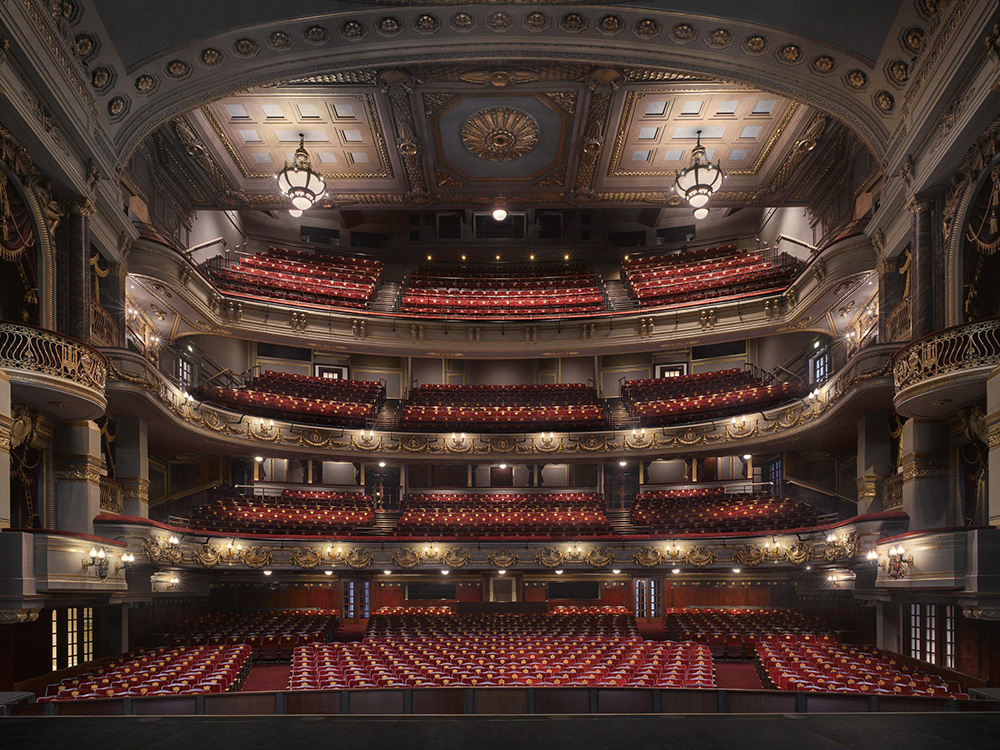
il s’agit principalement d’un auditorium traditionnel à scène frontale organisé avec des stalls et 3 balcons.
Capacité: 1.927 à 1.996 places
- Stalls: 737 places (env.)
- 1er balcon — Royal Circle: 457 places (env.)
- 2ème balcon — Grand Circle: 408 places (env.)
- 3ème balcon — Balcony: 371 places (env.)
Avant la rénovation de 2019 à 2021, la salle comprenait 200 places de plus.
③ Évolution architecturale
1663
Construction du premier théâtre
Thomas Killigrew fait construire le premier Theatre Royal, accessible depuis Bridges Street, grâce à une patente accordée par Charles II. Il ouvre le 7 mai 1663. Cette première salle, relativement modeste, accueille la King’s Company et les nouvelles formes théâtrales de la Restauration anglaise.
1672–74
Incendie et deuxième théâtre
Le premier théâtre disparaît dans un incendie le 25 janvier 1672. Un nouvel édifice, généralement attribué à Christopher Wren, est construit sur le même emplacement. Plus vaste et mieux adapté aux décors mobiles, il ouvre le 26 mars 1674.
④ Les différentes dénominations
1663
Sans Pareil
1819
Adelphi Theatre
1829
Theatre Royal, Adelphi
1858
Theatre Royal, New Adelphi
1901
Century Theatre
1904
Royal Adelphi Theatre
1940
Adelphi Theatre
⑤ Plan de salle et commentaires
⑥ Quelques points à souligner
Actuellement à l’affiche
1 production
Frozen
Type : Original London
À l’affiche depuis 5 ans 1 mois 3 semaines
Première preview : vendredi 27 août 2021
Première : vendredi 27 août 2021
Dernière : Open end
Compositeur : Kristen Anderson-Lopez • Robert Lopez
Parolier : Kristen Anderson-Lopez • Robert Lopez
Librettiste : Jennifer Lee
Metteur en scène : Michael Grandage
Chorégraphe : Rob Ashford
Commentaire : Disney's Frozen is coming to open the Theatre Royal Drury Lane in Autumn 2020 after its £45 million renovation and restoration programme is complete.
Frozen is brought to the stage by a multi-award-winning creative team, led by Tony® and Olivier Award-winning director Michael Grandage, with book from Academy® and BAFTA Award-winning Jennifer Lee, featuring the cherished songs from the original film, alongside a brand-new score from Kristen Anderson-Lopez and Robert Lopez, the Grammy® and Academy Award®-winning songwriters behind the global phenomenon “Let it Go”.
Passé — Chronologie des productions
44 productions
44) Fermeture COVID
Type : Original
Joué durant 1 an 4 mois
Première preview : lundi 16 mars 2020
Première : lundi 16 mars 2020
Dernière : lundi 19 juillet 2021
Commentaire : Tous les théâtres anglais ont dû fermer dès le 16 mars 2020 suite à la pandémide de COVID…
Le théâtre ferme pour 20 mois.
Le projet de rénovation veut restaurer le théâtre dans sa gloire historique de 1812. renovation project that will restore the historic theatre to its former 1812 glory.

43) 42nd Street
Type : Revival
Joué durant 1 an 9 mois
Première preview : lundi 20 mars 2017
Première : mardi 04 avril 2017
Dernière : samedi 05 janvier 2019
Compositeur : Harry Warren
Parolier : Al Dubin
Librettiste : Mark Bramble • Michael Stewart
Metteur en scène : Mark Bramble
Chorégraphe : Randy Skinner
Avec : Sheena Easton (Dorothy Brock), Tom Lister (Julian Marsh), Clare Halse (Peggy Sawyer), Jasna Ivir (Maggie Jones), Norman Bowman (Pat Denning), Stuart Neal (Billy Lawlor), Graeme Henderson (Andy Lee), Christopher Howell (Bert Barry), Bruce Montague (Abner Dillon), Mark McKerracher (Mac/Doc/Thug) and Emma Caffrey (Annie). Ensemble: Clare Rickard, Victoria Hay, Leah Harris, Jasmine Kerr, Millie O'Connell, Katy Riches, Gabrielle Lewis Dodson, Daisy Steere, Karli Vale, Sophie Camble, Christina Shand, Courtney George, Zoe Rogers, Jessica Keable, Sara Bispham, Lisa Dent, Katharine Pearson, Kirsty Fuller, Rebecca Herszenhorn, Charlene Ford, Dylan Mason, Philip Bertioli, Luke George, Ronan Burns, Eddie Myles, Ryan Gover, Sam Murphy, Freddie Clements, Zac Watts, Greg Bernstein, Kristen Gaetz, Charlotte Anne Steen, Gabrielle Cocca, Kate Ivory Jordan, Josh Andrews, Martin McCarthy
Commentaire : A new revival of the classic Broadway musical 42nd Street… After originally opening on Broadway in 1980 produced by David Merrick and directed by Gower Champion, the musical won the Tony Award for Best Musical and ran for 3,486 performances to January 1989. A West End production opened at the Theatre Royal Drury Lane on 8 August 1984 starring Catherine Zeta Jones and went on to win the Olivier Award for Best Musical.
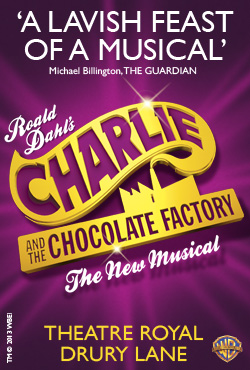
42) Charlie and the Chocolate Factory
Type : Original
Joué durant 3 ans 6 mois 2 semaines
Première preview : mercredi 22 mai 2013
Première : mardi 25 juin 2013
Dernière : samedi 07 janvier 2017
Compositeur : Marc Shaiman • Scott Wittman
Parolier : Marc Shaiman • Scott Wittman
Librettiste : David Greig
Metteur en scène : Sam Mendes
Chorégraphe : Peter Darling
Avec : Douglas Hodge (Willy Wonka), Nigel Planer (Grandpa Joe), Clive Carter (Mr Salt), Jasna Ivir (Mrs Gloop), Paul J Medford (Mr Beauregarde), Iris Roberts (Mrs Teavee), Myra Sands (Grandma Georgina), Joe Allen, David Birch, Michelle Bishop, Mireia Mambo Bokele, Matthew Clark, Alex Clatworthy, Jennifer Davison, Luke Fetherston, Nia Fisher, Kate Graham, Clare Halse, Mark Iles, Daniel Ioannou, Kieran Jae, Jane McMurtrie, Natalie Moore-Williams, Sherrie Pennington, Damien Poole, Paul Saunders, Jack Shalloo, Jay Webb.
Presse : "It only rarely touches the heart or stimulates the imagination. "
Charles Spencer for The Daily Telegraph
"Mendes brings a cinematic sweep to the party that propels proceedings at a rapid pace, overcoming any shortcomings in spectacle and wonder..
Alun Palmer for The Daily Mirror
"The score by the Hairspray combo of Scott Wittman and Marc Shaiman is tuneful and wholly unmemorable...Very engaging but rarely elating, this show is a skillful confection that doesn't quite produce the inspired sugar-rush of magic that's required. "
Paul Taylor for The Independent
"Delivers visual ravishment and a warm glow .
Ian Shuttleworth for The Financial Times
"Even if it doesn’t quite live up to the early hype it’s a tremendously inventive show. .
Henry Hitchings for The Evening Standard
"A triumph of exuberant stagecraft.
Simon Edge for The Express
"The success of Sam Mendes's production lies in its reminder that, for all the razzle-dazzle of Mark Thompson's sets and costumes, Dahl's story is essentially a moral fable.."
Michael Billington for The Guardian
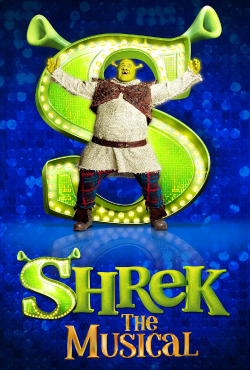
41) Shrek, The Musical
Type : Original London
Joué durant 1 an 8 mois 2 semaines
Première preview : vendredi 06 mai 2011
Première : mardi 14 juin 2011
Dernière : dimanche 24 février 2013
Metteur en scène : Jason Moore
Chorégraphe : Josh Prince
Avec : Nigel Lindsay (Shrek), Lord Farquaad (Nigel Harman), Richard Blackwood (Donkey), Amanda Holden (Princess Fiona), Jonathan Stewart (Pinocchio), Stephanie Bron (Snow Queen), Lee William-Davies (Wizard), Rosanna Hyland (Little Red Riding Hood), Bradley Jaden (Papa Bear), Jon-Scott Clark (Peter Pan), Delroy Atkinson (White Rabbit), Alice Fearn (Sugar Plum Fairy), Michael Watson (Jack) - from a total cast of 38 , s.
Commentaire : This West End version had been scaled down, given a new opening scene, and undergone a series of changes to make it more suitable for a British audience. A number of the fairy-tale characters were changed, and several songs were cut to shorten the running time of the show. Most of the reviews were enthusiastic, with especial praise for the praise for the “hysterically funny” Nigel Harman. In October 2011 Kimberley Walsh (from the pop group Girls Aloud) took over the role of Princess Fiona when Amanda Holden announced her pregnancy. Further cast changes occurred at the end of February 2012, when Dean Chisnall took over the role of Shrek, and Neil McDermott took over as Lord Farquaad. In May 2012 Carley Stenson took over the role of Princess Fiona. The show extended its booking period and announced it will close in February 2013.
Presse : "Blessed with a likeable mixture of wit and humanity...Shrek sets out to do no more than entertain, and in this it succeeds handsomely...Shrek certainly doesn’t rank among the musical greats, but it offers an engaging couple of hours of family fun" Charles Spencer for The Daily Telegraph
"Sentiment, beauty and haunting melody are absent. But Shrek is energetically amusing." Quentin Letts for The Daily Mail
"Though there's warmth and wit here, it's not a monster hit." Henry Hitchings for The Evening Standard
"What I love principally about the show, directed with great charm and elating zip by Jason Moore and Rob Ashford, is its delightfully uncynical freshness of spirit. " Paul Taylor for The Independent
"Although Shrek stems from the 2001 DreamWorks film, it is genuinely theatrical, generous-spirited and mercifully free of the sensory bombardment that afflicts some of its rivals. What it lacks is memorable tunes." Michael Billington for The Guardian
40) Oliver!
Type : Revival
Joué durant 1 an 11 mois 4 semaines
Nombre de représentations : 829
Première preview : samedi 13 décembre 2008
Première : mercredi 14 janvier 2009
Dernière : samedi 08 janvier 2011
Compositeur : Lionel Bart
Parolier : Lionel Bart
Librettiste : Lionel Bart
Metteur en scène : Sam Mendes • Rupert Goold
Chorégraphe : Matthew Bourne
Avec : Rowan Atkinson (Fagin), Jodie Prenger/Tamsin Carroll (Nancy ), Burn Gorman (Bill Sykes), Julius D’Silva (Mr Bumble) , Wendy Ferguson (Widow Corney) , Julian Bleach (Mr Sowerberry), Louise Gold (Mrs Sowerberry) Laurence Jeffcoate/Gwion Wyn Jones/Harry Stott (Oliver), Eric Dibb Fuller/Ross McCormack/Robert Madge (Artful Dodger)
Commentaire : Although based on the 1994 Palladium production, some new dance sequences were created and the Palladium prologue was removed. The show now opened, as it originally did in 1960, with the workhouse children entering, singing “Food Glorious Food”. The roles of Nancy and Oliver were cast via another BBC reality TV series. When Rowan Atkinson fell ill in April 2009, Russ Abbot took over for three months, after which Fagin was played by Omid Djalili. In December 2009, Griff Rhys Jones took over for six months, with Russ Abbot returning for another six months. Even before opening night, the show had broken all box-office records at Drury Lane (doubtless due to the TV publicity). For the final month, Griff Rhys Jones returned to see show to its triumphant end on January 8 th , 2011.
Presse : CHARLES SPENCER for THE DAILY TELEGRAPH says, "A cracking night of tuneful entertainment...It's absolutely fantastic showbiz." MICHAEL BILLINGTON for THE GUARDIAN says, " Although this is sanitised Dickens, Bart manages to write some thumping good tunes...Rowan Atkinson turns in a sprightly, distinctive performance...Jodie Prenger as Nancy ...acquits herself extremely well."QUENTIN LETTS for THE DAILY MAIL says, "Rowan Atkinson, playing that warped scout master Fagin, was the eyebrow-wriggling, funny-walking, laugh-wringing supremo of the show...Jodie Prenger, who won the part of the doomed, decent Nancy in a primetime BBC1 talent show, stands up to the test like a sturdy galleon...Anyone who needs cheering up should get along to Drury Lane sharpish and catch this humdinger of a night." MICHAEL COVENEY for THE INDEPENDENT says, "Well, is it a great musical? Yes. Is Rowan Atkinson any good as Fagin? Fairly good, fairly funny, but he can't sing very well... [Jodie Prenger] Her voice is okay, but she can't act and she doesn't have the depth of lung power to fill a plastic bag, let alone a West End theatre on a nightly basis...A masterpiece is restored, but not in its fullest glory." BENEDICT NIGHTINGALE for THE TIMES says, "Jodie Prenger...went on to prove herself a tough, coarse, credible presence with a big, robust voice...Oliver! remains as good and revivable as anything he [Bart] wrote." NICHOLAS DE JONGH for THE EVENING STANDARD says, "I felt director Rupert Goold, came up with a traditional, unadventurous Oliver."
39) Lord of the Rings (The)
Type : Original London
Première preview : mercredi 09 mai 2007
Première : mardi 19 juin 2007
Dernière : samedi 19 juillet 2008
Compositeur : Värttinä • A.R. Rahman
Parolier : Matthew Warchus • Shaun McKenna
Librettiste : Matthew Warchus • Shaun McKenna
Metteur en scène : Matthew Warchus
Presse : PAUL TAYLOR for THE INDEPENDENT says, "A bit of an identity crisis, strong on dynamic spectacle, squeezed as drama, and in two minds about how it wants to use music dramatically." KIERON QUIRKE for THE EVENING STANDARD says, "Ill-fated at conception, tedious and vulgar in execution." MICHAEL BILLINGTON for THE GUARDIAN says, "I had a perfectly good time at Drury Lane and, if Tolkien's trilogy is to be a stage spectacle, I don't see how it could be better done." CHARLES SPENCER for THE DAILY TELEGRAPH says, "The language is flat, portentous or twee, and there is barely a moment that makes you gasp...tiresome grandiosity with mind-rotting mediocrity" SAM MARLOWE for THE TIMES says, "A brave, stirring, epic piece of popular theatre that, without slavishly adhering to J.R.R. Tolkien’s novels, embraces their spirit. The show has charm, wit, and jaw-dropping theatrical brio; crucially, it also has real emotional heft."
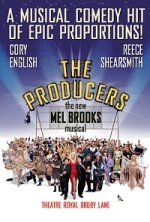
38) Producers (The)
Type : Original London
Joué durant 2 ans 1 mois 4 semaines
Nombre de représentations : 920
Première preview : vendredi 22 octobre 2004
Première : mardi 09 novembre 2004
Dernière : samedi 06 janvier 2007
Compositeur : Mel Brooks
Parolier : Mel Brooks
Librettiste : Mel Brooks • Thomas Meehan
Metteur en scène : Susan Stroman
Chorégraphe : Susan Stroman
Avec : Nathan Lane (Max Bialystock), Lee Evans (Leo Bloom), Leigh Zimmerman (Ulla), Nicolas Colicos (Franz Liebkind), Conleth Hill (Roger de Bris), James Dreyfus (Carmen Ghia)
Commentaire : Originally the hugely successful Mel Brooks 1968 film, this musical version opened on Broadway in April 2001 to massive acclaim, winning 12 Tony Awards, becoming the first Broadway show to take $1 million a week at the box office. It ran for 2,502 performances. The original much-acclaimed stars were Nathan Lane and Matthew Broderick. In due course British actor Henry Goodman replaced Nathan Lane and Steven Weber replaced Matthew Broderick, but Henry Goodman lasted just 30 performances before being replaced by Brad Oscar. The London production originally announced Richard Dreyfuss as Bialystock, but he dropped out a week before opening night and Nathan Lane rushed in to take over (at a fee of £39,000 per week!) until January, after which he was replaced with Brad Oscar.
Presse : NICHOLAS DE JONGH for THE EVENING STANDARD says, "A Spiffing knockabout musical comedy"
PAUL TAYLOR for THE INDEPENDENT says, "Unleashes an epidemic of bliss."
MICHAEL BILLINGTON for THE GUARDIAN says, "Intoxicating, time-suspending and slightly guilty pleasure."
CHARLES SPENCER for THE DAILY TELEGRAPH says, "From the opening number, the audience rides a tidal wave of pure pleasure and after three delirious hours one is left stunned by a combination of unstoppable laughter and sheer happiness."
BENEDICT NIGHTINGALE for THE TIMES says, "Mel Brooks, has transformed his celebrated movie into a musical comedy, and as funny a one as I’ve seen."

37) Anything goes
Type : Revival
Joué durant 10 mois 3 semaines
Nombre de représentations : 387
Première preview : mercredi 24 septembre 2003
Première : mardi 07 octobre 2003
Dernière : samedi 28 août 2004
Compositeur : Cole Porter
Parolier : Cole Porter
Librettiste : Guy Bolton • P.G. Wodehouse
Metteur en scène : Trevor Nunn
Chorégraphe : Stephen Mear
Avec : Sally Ann Triplett (Reno Sweeney), John Barrowman (Billy Crocker), Martin Marquez(Moonface Martin), Annette McLauglin (Erma), Susan Tracy (Mrs. Evangeline Harcourt), Simon Day (Lord Evelyn Oakleigh), Mary Stockley (Hope Harcourt), Denis Quilley (Elisha Whitney), Anthony Cable (Henry T. Dodson), Paul Grunert (Ship's Captain), Robin Soans (Ship's Purser), Duncan Smith FBI Agent, Raymond Chai (John/Luke), Vao Chin (Luke/John)
Commentaire : Transfert du National Theatre.
It had been announced that due to illness Denis Quilley would not be repeating his performance as Elisha Whitney when the show transferred to the West End. The show was already in previews at Drury Lane when it was announced that Denis Quilley had died - two days before the press night. He was 75 and had died of liver cancer.
The opening night was dedicated to his memory.
Presse : NICHOLAS DE JONGH for THE EVENING STANDARD says, "The musical sends you out on a high."
RHODA KOENIG for THE INDEPENDENT says, "Fabulous production."
MICHAEL BILLINGTON for THE GUARDIAN says, "As tune-and-toe shows go, this is about as good as it gets."
CHARLES SPENCER for THE DAILY TELEGRAPH says, "A glorious voyage to theatrical bliss."
IAN JOHNS for THE TIMES says, "The cast seem to enjoy themselves more as the show progresses and you will too."
ALASTAIR MACAULAY for THE FINANCIAL TIMES says, "A triumph of ensemble."

36) My Fair Lady
Type : Revival
Joué durant 2 ans 1 mois 1 semaine
Nombre de représentations : 873
Première preview : samedi 21 juillet 2001
Première : samedi 21 juillet 2001
Dernière : samedi 30 août 2003
Compositeur : Frederik Loewe
Parolier : Alan Jay Lerner
Librettiste : Alan Jay Lerner
Metteur en scène : Trevor Nunn
Chorégraphe : Matthew Bourne
Avec : Jonathan Pryce (Henry Higgins), Martine McCutcheon (Eliza Doolittle), Dennis Waterman (Alfred P. Doolittle), Nicholas Le Prevost (Colonel Pickering), Caroline Blakiston (Mrs Higgins), Mark Umbers (Freddy Eynsford-Hill), Patsy Rowlands (Mrs Pearce), Jill Martin, Sevan Stephan, Ann Emery
Commentaire : This hugely-praised revival won four Olivier Awards, including Best Musical, and awards for Martine McCutcheon and Matthew Bourne. From the outset Martine McCutcheon was plagued with throat problems, and very frequently missed performances, being replaced (to much acclaim!) by her understudy, Alexandra Jay. By December, with five months left on her contract, it was clear that Martine McCutcheon could not continue, and she was replaced with Joanna Riding (who went on to win a further Olivier Award for the show as Best Actress in a Musical in 2003). The show ran two years at Drury Lane, finishing at the end of August, 2003. (It was revived for a 12 city UK tour in September 2005, ending in August 2006. This tour starred Amy Nuttall and Lisa O’Hare as Eliza, Christopher Cazenove as Henry Higgins, Russ Abbot and Gareth Hale as Doolittle, and Honor Blackman and Hannah Gordon as Mrs Higgins.)
Presse : NICHOLAS DE JONGH for THE EVENING STANDARD describes Martine McCutcheon's performance as 'marvellous" and describes the show as "fairly magical".
SHERIDAN MORLEY for TELETEXT says the show is "sharp and sturdy".He goes on to say, "Matthew Bourne's choreography is brilliant.."
MICHAEL COVENEY for THE DAILY MAIL, describes McCutcheon's performance as "bubbly, bright and immensely endearing". He goes on to say, "In Jonathan Pryce's Higgins we have a major performance by a major actor." He finishes with describing the show as "Wonderfully theatrical."
CHARLES SPENCER for THE DAILY TELEGRAPH says, "Pryce combines commanding authority with charm and delivers the songs with far more panache than Rex Harrison." He goes on to say, "The night belongs to McCutcheon."
BENEDICT NIGHTINGALE for THE TIMES says, "A success to rival the National's Oklahoma!."
MICHAEL BILLINGTON for THE GUARDIAN says, "The first half of the evening is shamelessly enjoyable. But after the interval, doubts crowd in about the show and the production."
ROBERT GORE-LANGTON for THE DAILY EXPRESS says, "It's effortlessly enjoyable."
RHODA KOENIG for THE INDEPENDENT says, "Trevor Nunn's show crackles like a house on fire."
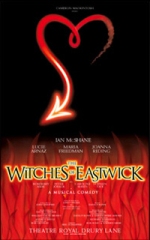
35) Witches of Eastwick (The)
Type : Original
Joué durant 7 mois 1 semaine
Nombre de représentations : 255
Première preview : samedi 24 juin 2000
Première : mardi 18 juillet 2000
Dernière : samedi 24 février 2001
Compositeur : Dana P. Rowe
Parolier : John Dempsey
Librettiste : John Dempsey
Metteur en scène : Eric Schaeffer
Chorégraphe : Bob Avian • Stephen Mear
Avec : Ian McShane (Daryll Van Horne), Lucie Arnaz (Alexandra Spofford), Joanna Riding (Jane Smart), Maria Friedman (Sukie Rougemont), Rosemary Ashe (Felicia Gabriel), Stephen Tate (Clyde Gabriel), Caroline Sheen (Jennifer Gabriel), Peter Jöback (Michael Spofford), Gee Williams (Fidel), Sarah Lark (Little Girl), Jasna Ivir (Gina Marino), Tim Walton (Joe Marino), Anne Marie McCormack (Gretta Neff), Kevin Wainwright (Raymond Neff), Lisa Peace (Marge Persley), Shaun Henson (Homer Persley), Earl Carpenter (Reverend Ed Parsley), Kathryn Akin (Brenda Parsley), Jocelyn Hawkyard (Rebecca Barnes), Nick Searle (Toby Bergman), Valda Aviks (Eudora Bryce), Matt Dempsey (Curtis Hallerbread), Scarlett Strallen (Mavis Jessup), Julia Sutton (Franny Lovecraft), Chris Holland (Frank Ogden), Alison Forbes (Mabel Ogden), Maurice Lane (Dr Henry Pattison), Jean McGlynn (Marcy Wills)
Commentaire : Based on John Updike’s novel and the film version starring Jack Nicholson, the musical version initially earned mostly positive reviews, but failed to fill the vast Drury Lane auditorium. After seven months it was replaced with a scaled-down version and moved to the more intimate Prince of Wales Theatre. A number of scenes were re-written and the song “Who's the Man?1” was replaced with a rousing gospel number, “The Glory of Me”. At the same time Ian McShane left and was replaced by his understudy, Earl Carpenter. At the end of its first year a general cast change saw Clarke Peters take over as Darryl van Home and Josefina Gabrielle and Rebecca Thornhill replaced Lucie Arnaz and Maria Friedman. On Oct 27th, 2001 the show closed after a 15 month run. There had been a disastrous drop in ticket sales, attributed to a downturn in tourism following the September 11th Twin-Towers attack in New York.
Presse : SHERIDAN MORLEY for TELETEXT says, "This is in every possible sense a magical show; written, composed, choreographed, designed, directed and played to within inches of perfection." He goes on to say, " The Witches of Eastwick is the musical that starts the 21st century, and it will be a hard act to follow."
EDWARD SECKERSON for THE INDEPENDENT, says "The enjoyment factor is high, the production values sky-high." He goes on to say it is a "likeable and beautifully mounted show".
MATT WOLF for REUTERS/VARIETY, also generally liked the show, saying, "As long as its leading ladies join forces vocally, not to mention aerially, the show flies.. As it happens, that's often enough to keep director Eric Schaeffer's production mostly airborne, despite some dead patches in the second act and a game if underpowered leading man..... When he's not attempting to sing or dance, McShane cuts an attractive roue who matches up perfectly to the ``bearish, dark man'' described in Updike's novel."
BENEDICT NIGHTINGALE for THE TIMES, says, "Dana P. Rowe's music remains refreshingly tuneful, whether it opts for the energetic and brash or for the soft and slightly soppy. John Dempsey's rhymes are never feeble or silly, though seldom very clever. But I caught myself wishing for a dash of Sondheim or Weill, a pinch more toughness and acerbity, along with the fingernails and frogs in the witches' brew."
NICHOLAS DE JONGH for THE EVENING STANDARD gave the show a mixed review saying, "Of the 20 songs, some inspiring frenetic choreography by Bob Avian and Stephen Mear, just one, the witty Dirty Laundry, boasts the impact of a hit. And Maria Friedman also plays powerful, poignant vocal gymnastics in Words, Words Words. But though Rowe's score achieves snatches of symphonic excitement and drama, this is a musical where the scenes between songs and music provide most of the fun and amusement."
ROBERT HEWISON for THE SUNDAY TIMES says,"There are many things to be enjoyed in The Witches of Eastwick."
MICHAEL BILLINGTON for THE GUARDIAN says, "Devil of a good sex fantasy set to music." He goes on to say "Ian McShane as the devil may not have all the best tunes but, after a long absence from the stage, he overflows with energy and a leering, saloon bar smuttiness." Billington goes on to say that "Maria Friedman is outstanding...Joanna Riding is also sharply funny."
SUSANNAH CLAPP for the OBSERVER says, "It's a bubbling cauldron, but it's not spellbinding. The Witches of Eastwick, the catchy and colourful new musical production from Sir Cameron Mackintosh, has lots to recommend it. What it lacks is an original pulse, and a dynamic leading man."
CHARLES SPENCER for THE DAILY TELEGRAPH says, "WHAT a relief. After a string of duds this year, the West End finally has a new musical worth making a song and dance about."

34) Follies
Type : Concert
Nombre de représentations : 1
Première : dimanche 08 décembre 1996
Dernière : dimanche 08 décembre 1996
Compositeur : Stephen Sondheim
Parolier : Stephen Sondheim
Librettiste : James Goldman
Avec : Sally Durant Plummer ... Julia McKenzie
Phyllis Rogers Stone ... Donna McKechnie
Benjamin Stone ... Denis Quilley
Buddy Plummer ... Ron Moody
Carlotta Campion ... Angela Richards
Stella Deems ... Joan Savage
Hattie Walker ... Libby Morris
Solange LaFitte ... Elizabeth Seal
Roscoe ... Stephen Hill
Heidi Schiller ... Eileen Page
33) Miss Saigon
Type : Original
Joué durant 10 ans 1 mois 1 semaine
Nombre de représentations : 4264
Première : mercredi 20 septembre 1989
Dernière : samedi 30 octobre 1999
Compositeur : Claude-Michel Schonberg
Parolier : Alain Boublil • Richard Jr Maltby
Librettiste : Alain Boublil • Claude-Michel Schonberg
Metteur en scène : Nicholas Hytner
Chorégraphe : Bob Avian
Avec : Kim … Lea Salonga
Mimi … Monique Wilson
Gigi … Isay Alvarez
Yvonne … Dominique Nobles
Yvette … Jenine Desiderio
Bar Girl … Pinky Amador, Ruthie Henshall, Suchitra Sen Sawrattan, Shukubi Yo, Antoinette Lo, Claudia Cadette
The Engineer … Jonathan Pryce
John … Peter Polycarpou
Chris … Simon Bowman
Marine … Johnny Amobi, Gerard Casey, Mark Carroll, Richard Calkin, Greg Ellis, Andrew Golder, Nick Holder, Jimmy Johnston, Glyn Kerslake, Ray Shell, Michael Strassen, Louie Spence
Reporter … Tash O'Connor, Mark Bond
Barman … Robert Sena, Jon Jon Briones
Officer of the South Vietnamese Army … Chooi Kheng Beh, Junix Inocian
Vietnamese Customer … Miguel Diaz, Jay Ibot, Victor Laurel, Bobby Martino, William Michaels, Lyon Roque
Mama San … Andy Lanai
Thuy … Keith Burns
Ellen … Claire Moore
Tam … David Platt, Wasseem Hamdan, Allen Evangelista
Pham … Junix Inocian
Huynh … Miguele Diaz
Assistant Commissar … Victor Laurel
Dragon Acrobat … Jimmy Johnston
NVA Soldier … Bobby Martino, Jay Ibot, Andy Lanai, Jon Jon Briones, Chooi Kheng Beh, Robert Sena, Lyon Roque
Hustler … Junix Inocian, Victor Laurel, Lyon Roque, Miguel Diaz
Owner of the Moulin Rouge … Nick Holder
Go-Go Dancer … Pinky Amador, Suchitra Sen Sawrattan, Monique Wilson, Jenine Desiderio
Shultz … Mark Bond
Harrison … Greg Ellis
Travis … Ray Shell
Weber … Michael Strassen
Estevez … Andrew Golder
Allott … Tash O'Connor
Commentaire : The lavish production was notable for the helicopter scene - where a full-size helicopter landed onstage - as well as other spectacular scenic effects.

32) Nymph Errant
Type : Concert
Nombre de représentations : 1
Première preview : dimanche 21 mai 1989
Première : dimanche 21 mai 1989
Dernière : dimanche 21 mai 1989
Compositeur : Cole Porter
Parolier : Cole Porter
Librettiste : Romney Brent
Metteur en scène : Aucun
Avec : Kaye Ballard / Emile Belcourt / Fiona Fullerton / Patricia Hodge / Larry Kert / Lisa Kirk / Andrea McArdle / Maureen McGovern / Virginia McKenna / Liliane Montevecchi
31) Mack and Mabel
Type : Concert
Nombre de représentations : 1
Première preview : dimanche 21 février 1988
Première : dimanche 21 février 1988
Dernière : dimanche 21 février 1988
Compositeur : Jerry Herman
Parolier : Jerry Herman
Librettiste : Michael Stewart
Avec : Georgia Brown, Debbie Gravitte, George Hearn, Jerry Herman, David Jacobs, Stubby Kaye, Robert Meadmore, Paige O'Hara, Denis Quilley, Frances Ruffelle

30) 42nd Street
Type : Original London
Joué durant 4 ans 5 mois
Nombre de représentations : 1823
Première : mercredi 08 août 1984
Dernière : samedi 07 janvier 1989
Compositeur : Harry Warren
Parolier : Al Dubin
Librettiste : Mark Bramble • Michael Stewart
Metteur en scène : Gower Champion
Chorégraphe : Gower Champion
Avec : Clare Leach (Peggy Sawyer), Georgis Brown (Dorothy Brock), James Laurenson (Julian Marsh), Michael Howe (Billy Lawlor), Margaret Courtenay (Maggie Jones), Hugh Futcher, Catherine Terry
Commentaire : Based on the 1933 Warner Brothers film, the score was supplemented with additional songs from the catalogue of Warren and Dubin. It ran for ten years on Broadway. During its London run James Laurenson was replaced with Frankie Vaughan.
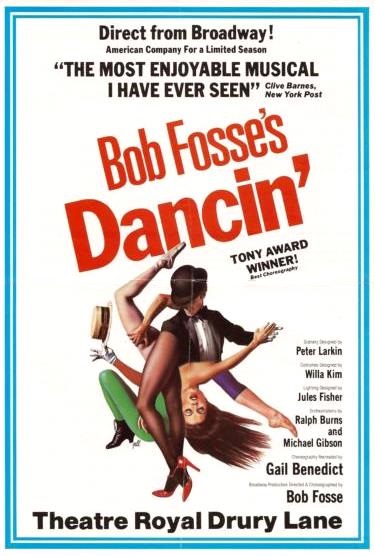
29) Dancin'
Type : Original London
Nombre de représentations : 88
Première : lundi 14 novembre 1983
Dernière : jeudi 28 février 1884
Metteur en scène : Bob Fosse
Chorégraphe : Bob Fosse
Commentaire : This production was roundly condemned by almost all the critics. Most of the reviews resented the pseudo-didactic approach of a narrator introducing the various episodes with a kind of lecture on dance techniques, and it was described as a “scrappily insubstantial little show”. One comment said: “ I feel this particular company has been on the road too long in a vehicle that is positively creaking.”

28) Pirates of Penzance (The)
Type : Revival
Joué durant 1 an 5 mois
Première : mercredi 26 mai 1982
Dernière : samedi 29 octobre 1983
Compositeur : Arthur Sullivan
Parolier : W.S. Gilbert
Librettiste : W.S. Gilbert
Metteur en scène : Wilford Leach
Chorégraphe : Graciela Daniele
Avec : Tim Curry (Pirate King), Pamela Stephenson (Mabel), George Cole (Major General), Michael Praed (Frederic), Annie Ross (Ruth), Bonnie Langford, Louise Gold
Commentaire : This was based on Joseph Papp’s New York Shakespeare Festival Production. It was a completely “new” look at the show - a kind of Broadway version of G&S - and received excellent notices for its exuberance and sheer fun (without straying too far from the original!)
It ran for 17 months, finishing on October 29th, 1983
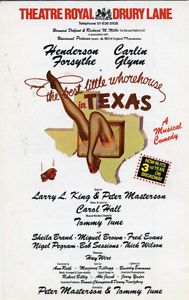
27) Best Little Whorehouse in Texas (The)
Type : Original London
Joué durant 5 mois 3 semaines
Nombre de représentations : 204
Première preview : jeudi 26 février 1981
Première : jeudi 26 février 1981
Dernière : samedi 22 août 1981
Compositeur : Carol Hall
Parolier : Carol Hall
Librettiste : Larry L. King • Peter Masterson
Metteur en scène : Tommy Tune • Peter Masterson
Chorégraphe : Tommy Tune
Avec : Carlin Glynn (Mona Stangley), Henderson Forsythe (Ed Earl Dodd), Nigel Pegram (Melvin P. Thorpe), Thick Wilson, Robert Meadmore, Simon Brotherhood, Sally Ann Triplett, Graham Bennett
Commentaire : Although the show contains nothing offensive, the title itself was not one to attract the matinee and out-of-town trade. The notices were good, but it managed just a six month run.
26) Sweeney Todd
Type : Original London
Joué durant 4 mois 2 semaines
Nombre de représentations : 157
Première preview : mercredi 02 juillet 1980
Première : mercredi 02 juillet 1980
Dernière : samedi 15 novembre 1980
Compositeur : Stephen Sondheim
Parolier : Stephen Sondheim
Librettiste : Hugh Wheeler
Metteur en scène : Harold Prince
Chorégraphe : Larry Fuller
Avec : Denis Quilley (Sweeney Todd), Sheila Hancock (Mrs Lovett), Andrew C. Wadsworth (Anthony), Many More (Johanna), Michael Staniforth (Tobias), Austin Kent (Judge Turpin), John Aron (Pirelli), Dilys Watling (Beggar Woman)
Commentaire : Based on the play by Christopher Bond. This Grand-Guignol semi-operatic piece is generally held to be a masterpiece and has gone on to have world-wide success. Yet this first London production failed. It was an exact copy of the Broadway version which won 8 Tony Awards and ran for 558 performances - but the London critics were scathing. They claimed the production was over-blown, swamped with heavy scenery and pretentious. (A later much simpler “chamber” version at the Cottesloe Theatre was an enormous success.)

25) Hello, Dolly!
Type : Revival
Nombre de représentations : 170
Première : mardi 25 septembre 1979
Dernière : Inconnue
Compositeur : Jerry Herman
Parolier : Jerry Herman
Librettiste : Michael Stewart
Metteur en scène : Lucia Victor
Chorégraphe : Ron Crofoot
Avec : Carol Channing (Dolly Levi), Eddie Bracken (Horace Vandergelder), Maureen Scott (Irene Molloy), Mandy More (Minnie Fay), Tudor Davies (Cornelius Hackl), Richard Drabble (Barnaby Tucker)
Commentaire : London had seen Mary Martin followed by Dora Bryan as “Dolly” - but this was a chance to see the original New York Dolly in the person of the legendary Carol Channing. The performance was hailed as absolute magic—though the production itself was said to be not a patch on the first time round.
Sera prolongé au Shaftesbury Theatre.
24) Brasil Tropical
Type : Original
Première : mardi 29 mai 1979
Dernière : Inconnue
Avec : Company: The Tropicana Theatre Co
Commentaire : This was a stage extravaganza from the Rio Carnival which was squeezed into Drury Lane at the last minute. The long-running “Chorus Line” had ended and the next show was advertised as “Bob Fosse’s Dancin”. However, this ran into Equity problems over the American cast, and “Dancin”’ was cancelled. (It would eventually make it to London in 1983). “Brazil Tropical” was hastily put on through the summer until a new production of “Hello Dolly” with Carol Channing replaced it on September 25th.

23) A Chorus Line
Type : Original London
Joué durant 2 ans 8 mois 1 semaine
Nombre de représentations : 903
Première : jeudi 22 juillet 1976
Dernière : samedi 31 mars 1979
Compositeur : Marvin Hamlisch
Parolier : Edward Kleban
Librettiste : James Kirkwood • Nicholas Dante
Metteur en scène : Michael Bennet
Chorégraphe : Michael Bennet

22) No, No, Nanette
Type : Revival
Joué durant 7 mois 3 semaines
Nombre de représentations : 277
Première preview : mardi 15 mai 1973
Première : mardi 15 mai 1973
Dernière : 1974
Compositeur : Vincent Youmans
Parolier : Irvin Caesar • Otto Harbech
Librettiste : Frank Mandel • Otto Harbech
Metteur en scène : Burt Shevelove
Chorégraphe : Donald Saddler
Avec : Tony Britton (Jimmy Smith), Anna Neagle (Sue Smith), Anne Rogers (Lucille Early), Teddy Green (Billy Early), Thora Hird (Pauline), Barbara Brown (Nanette), Anita Graham, Elaine Holland, Jenny Wren, Peter Gale
Commentaire : La production originale de 1925 avait connu un très long US Tour de Try-Out (qui durera plus d'un an) ce qui avait amené le musical à être créé à Londres au <strong><span class="highlight4">Palace Theatre</span></strong> en mars 1925 avec <strong><span class="highlight3">Ginnie Hale</span></strong> et <strong><span class="highlight3">George Grosssmith</span></strong> avant Broadway! La série londonienne a tenu à l'époque 665 représentations – deux fois la série new-yorkaise (lorsque la série a finalement atteint Broadway six mois après la première londonienne). Le premier revival londonien eut lieu à l’<strong><span class="highlight4">Hippodrome Theatre</span></strong> en 1936 avec <strong><span class="highlight3">Barbara Vernon</span></strong> et <strong><span class="highlight3">Shaun Glenville</span></strong>.
La production de Londres 1973 était une version révisée qui avait initialement ouvert sur Broadway avec <strong><span class="highlight3">Ruby Keeler</span></strong>. Cette fois-ci, la position est inversée: le show de New York totalise 861 représentations, mais celui de Londres n’en compte que 277.

21) Great Waltz (The)
Type : Original London
Joué durant 1 an 7 mois 3 semaines
Première preview : jeudi 09 juillet 1970
Première : jeudi 09 juillet 1970
Dernière : mercredi 01 mars 1972
Compositeur : Johann Strauss I • Johann Strauss II
Parolier : Desmond Carter • George Forrest • Oscar Hammerstein II • Robert Wright
Librettiste : A.M. Willner • Moss Hart
Metteur en scène : Wendy Toye
Chorégraphe : Edmund Balin
Avec : Walter Cassel (Johan Strauss Snr.), David Watson (Schani), Sari Barabas (Helene Vernet), Diane Todd (Resi), Robert Dorning (Dommeyer), Leo Fuchs (Hirsch), Eric Brotherson (Hartkopf)
Commentaire : The book was pedestrian, the lyrics unexciting – and sometimes quite dreadful – but the music was glorious, the costumes gorgeous and the scenery entrancing. In spite of the critics it filled the vast Drury Lane for over 600 performances. Originally the producer Harold Fielding tried his best to persuade the best-loved and most famous European operetta star, Anneliese Rothenberger to play Helen Vernet, but the role eventually went to Hungarian opera star Sari Barabas, and Walter Cassel from New York’s Metropolitan Opera.
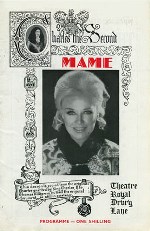
20) Mame
Type : Original London
Nombre de représentations : 443
Première preview : jeudi 20 février 1969
Première : jeudi 20 février 1969
Dernière : Inconnue
Compositeur : Jerry Herman
Parolier : Jerry Herman
Librettiste : Jerome Lawrence • Robert E Lee

19) Hello, Dolly!
Type : Original London
Nombre de représentations : 794
Première preview : jeudi 02 décembre 1965
Première : jeudi 02 décembre 1965
Dernière : Inconnue
Compositeur : Jerry Herman
Parolier : Jerry Herman
Librettiste : Michael Stewart
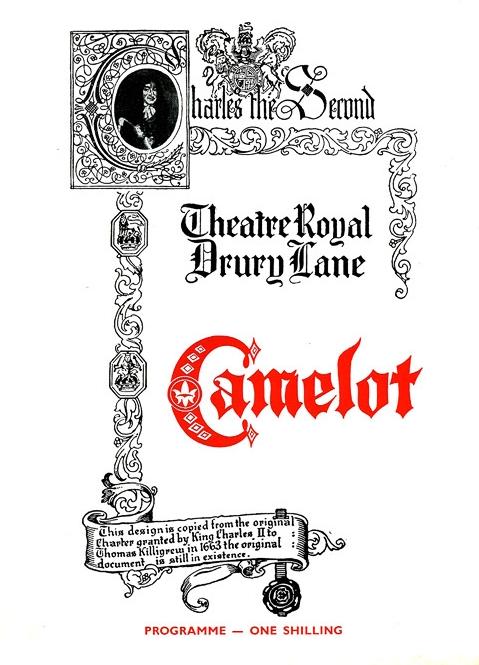
18) Camelot
Type : Original London
Nombre de représentations : 518
Première : mercredi 19 août 1964
Dernière : Inconnue
Compositeur : Frederik Loewe
Parolier : Alan Jay Lerner
Librettiste : Alan Jay Lerner
Metteur en scène : Robert Helpmann
Chorégraphe : Robert Helpmann
Avec : Merlyn … Miles Malleson
Arthur … Laurence Harvey
Guenevere … Elizabeth Larner
Lancelot … Barry Kent
Pellinore … Cardew Robinson
Mordred … Nicky Henson
Morgan Le Fey … Moyra Fraser
Sir Dinadan … Victor Flattery
Sir Clarius … Paul Ferris
Sir Lionel … Raymond Edwards

17) Boys from Syracuse (The)
Type : Original London
Nombre de représentations : 100
Première : jeudi 07 novembre 1963
Dernière : Inconnue
Compositeur : Richard Rodgers
Parolier : Lorenz M. Hart
Librettiste : George Abott • William Shakespeare
Metteur en scène : Christopher Hewett
Chorégraphe : Bob Herget
Avec : Bob Monkhouse (Antipholus of Syracuse), Maggie Fitzgibbon (Luce), Lynn Kennington (Adriana), Paula Hendrix (Luciana), Ronnie Corbett (Dromio of Syracuse) , Sonny Farrer (Dromio of Ephesus), Denis Quilley (Antipholus of Ephesus)
16) My Fair Lady
Type : Original London
Nombre de représentations : 2281
Première preview : mercredi 30 avril 1958
Première : mercredi 30 avril 1958
Dernière : Inconnue
Compositeur : Frederik Loewe
Parolier : Alan Jay Lerner
Librettiste : Alan Jay Lerner

15) King and I (The)
Type : Revival
Nombre de représentations : 926
Première preview : jeudi 08 octobre 1953
Première : jeudi 08 octobre 1953
Dernière : Inconnue
Compositeur : Richard Rodgers
Parolier : Oscar Hammerstein II
Librettiste : Oscar Hammerstein II
Metteur en scène : John van Druten
Chorégraphe : Jerome Robbins
Avec : Valerie Hobson (Anna), Herbert Lom (King), Muriel Smith (Lady Thiang), Doreen Duke (Tuptim), Jan Mazurus (Lun Tha)

14) South Pacific
Type : Original London
Joué durant 1 an 11 mois
Nombre de représentations : 802
Première preview : jeudi 01 novembre 1951
Première : jeudi 01 novembre 1951
Dernière : samedi 26 septembre 1953
Compositeur : Richard Rodgers
Parolier : Oscar Hammerstein II
Librettiste : Joshua Logan • Oscar Hammerstein II
Metteur en scène : Joshua Logan
Chorégraphe : Joshua Logan
Avec : Mary Martin (Nellie Forbush), Wilbur Evans (Emile), Peter Grant (Lt. Cable), Muriel Smith (Bloody Mary) Ray Walston (Luther), Ivor Emmanuel (Sgt Johnson), Betta St John (Liat) . (Mary Martin’s real-life son, Larry Hagman, played a small role in the show.)
Commentaire : Based on two of the stories from James Michener’s “Tales of the South Pacific”, both of which showed the power of love to break down racial barriers, this was considered controversial material in the USA of 1949. The London production initially received rather cool notices - and was nicknamed “South Soporific” by one critic. It was felt to be a very poor second to “Oklahoma”. However, audiences disagreed and the show became a great success. After completing a year’s run, Mary Martin left and was replaced with Julie Wilson. At a later point in its long run, Sean Connery took over in one of the chorus roles. “South Pacific” was only revived in London in 1988.

13) Carousel
Type : Original London
Joué durant 1 an 4 mois 1 semaine
Nombre de représentations : 566
Première : mercredi 07 juin 1950
Dernière : samedi 13 octobre 1951
Compositeur : Richard Rodgers
Parolier : Oscar Hammerstein II
Librettiste : Oscar Hammerstein II
Metteur en scène : Rouben Mamoulian
Chorégraphe : Agnès de Mille
Avec : Carrie Pipperidge … Margot Moser
Julie Jordan … Iva Withers
Mrs. Mullin … Marjorie Mars
Billy Bigelow … Stephen Douglass
Bessie/Singer … Sandra Hartley
Juggler … Eddie Le Roy
First Policeman/Principal/Singer … Vincent Charles
David Bascombe … W. Thorpe Devereux
Nettie Fowler … Marion Ross
June Girl … Mavis Ray

12) Oklahoma!
Type : Original London
Joué durant 3 ans 5 mois 3 semaines
Nombre de représentations : 1544
Première preview : mercredi 30 avril 1947
Première : mercredi 30 avril 1947
Dernière : samedi 21 octobre 1950
Compositeur : Richard Rodgers
Parolier : Oscar Hammerstein II
Librettiste : Oscar Hammerstein II
Metteur en scène : Rouben Mamoulian • Jerome Whyte
Chorégraphe : Agnès de Mille
Avec : Mary Marlo (Aunt Eller), Harold Keel (Curly), Betty Jane Watson (Laurey), Walter Donahue (Will Parker), Dorothea MacFarland (Ado Annie), Henry Clarke (Jud Fry), Marek Windheim (Ali Hakim)
Commentaire : Drury Lane: 30/4/1947 > 27/5/1950
Stoll Theatre: 29/5/1950 > 21/10/1950
La Try-Out à Manchester a commencé un jour plus tard que prévu lorsque le navire qui transportait la troupe, les décors et les costumes s’est échoué sur un banc de sable au large de Southampton.
La production londonienne était une recréation exacte du spectacle de Broadway.
11) Dancing Years (The)
Type : Original
Nombre de représentations : 187
Première : jeudi 23 mars 1939
Dernière : Inconnue
Compositeur : Ivor Novello
Parolier : Christopher Hassall
Librettiste : Ivor Novello
Metteur en scène : ???? ????
Chorégraphe : ???? ????
Avec : Mary Ellis, Olive Gilbert, Ivor Novello, Dunstan Hart, Roma Beaumont.

10) Crest of the Wave
Type : Original
Joué durant 5 mois 4 semaines
Nombre de représentations : 205
Première preview : mercredi 01 septembre 1937
Première : mercredi 01 septembre 1937
Dernière : samedi 26 février 1938
Compositeur : Ivor Novello
Parolier : Christopher Hassall
Librettiste : Ivor Novello
Avec : Kenneth Howell (Stone), Peter Graves (Lord William Gantry), Ivor Novello (Don, Otto Fresch), Oscar Alexander (Josef von Palasti), John Palmer, Walter Crisham (Freddie Layton), Reginald Smith, Fred Hearne, Jack Glyn, Sandy Williamson, Harry Fergusson, Aubrey Rouse, Douglas Taylor, Harry Fergusson, Finlay Currie, Basil Neale, Charles Tully, Gilbert Clarke, Selwyn Morgan, Robert Coomber, Robert Day, Eric Davy, Charles Denby, Edgar Elmes, Harry Foster, Walter Gummow, Stuart Harding, Harry Lacey, Jack Norris, Leslie Perrett, Hilton Porter, Ben Pullen, Richard Rogers, Aubrey Rouse, John Vernon, William Wallace, Frederick Warren, Ridgway West, Arthur Budd, Gordon Craig, Patt Day, Billy Holmes, Pat Hulley, Tony Hulley, Anthony Hunt, Edgar Kebbell, Edward King, Neil O'Brien, Terry Rendle, Charles Stevens, Marie Löhr (Virginia Duchess of Cheviot), Judith Wren, Dorothy Batley, Ena Burrill, Joan Swinstead, Dorothy Dickson, Minnie Rayner, Olive Gilbert, Renee Stocker, Ann Angela, Margot Barnett, Gertrude Baxter, Judy Bennett, Jane Box, Jeanette Carello, Ann Clare, Evelyn Cooke, Dorothy Cooper, Rosamund Dalton, Patricia Dane, June Edgar, Dorothy Fox, Joan Grundy, Roberta Huby, Neli Jones, Edith Juster, Joyce May, Eileen Moore, Eileen Penberthy, Freda Pettitt, Rani Rama, Red Rowan, Barbara Silverius, Angela Stanton, Gladys Steele, Marjorie Tomlin, Iris Wade, Ruth Winship, Georgette Bishop, Barbara Bonnar, Mary Bromshall, Irene Busby, Hilary de Chaville, Marjorie Cormack, Dorothy Davies, Betina Frowde, Joy Francis, Diana Glover, Betty Greaves, Pat Grey, Tibby Helmer, Gay Hickman, Alethea Jermaine, Decima Knight, Joan Larrington, Moya Macqueen Pope, Kathleen MacVitie, Marie Nashe, Sheila Robertson, Winifred Scott, Josephine Tarsey, Ginger Teague, Bebe Verdi
9) Glamorous Night
Type : Original
Joué durant 7 mois
Nombre de représentations : 243
Première preview : jeudi 02 mai 1935
Première : jeudi 02 mai 1935
Dernière : samedi 30 novembre 1935
Compositeur : Ivor Novello
Parolier : Christopher Hassall
Librettiste : Ivor Novello
Avec : Ivor Novello (Anthony Allen), Mary Ellis (Militza Hajos), Minnie Rayner (Phoebe), Barry Jones (King Stefan of Krasnia), Peter Graves (Nico), Olive Gilbert, Trefor Jones, Elisabeth Welch, Muriel Barron, Lyn Harding, John Gatrell, Blake Gifford, Victor Boggetti, Rudolph Brant, Gerald Aintree, David Bateman, Herbert Court, Robert Coomber, Robert Day, Edgar Elmes, Harry Fergusson, Harry Foster, David Garrie, Peter Graves, Blake Gifford, David Morgan, Selwyn Morgan, Roy Neilson, John Norris, Bertram Pain, Gordon Phelps, Douglas Robinson, Aubrey Rouse, Barry Sherwood, Reg Smith, Eric Sutherland, John Vernon, William Wallace; Dancers Gordon Craig, Peter Crawford, Patt Day, Hugh Fraser, Stanley Haig-Brown, Billy Holmes, Anthony Hunt, Edgar Kebbell, Edward King, Patrick McGrath, Neil O'Brien, Philip Roma, Leslie Valler. Mrs. Allen Gwen Floyd; Phyllis, Dulcie Glasborough Muriel Barron; Bertha Potman Sylvia Robin; Clara Potman Betty Bucknell; Rosetta Spalding Marie Greenhouse; Phoebe Minnie Rayner; Militza Hajos, Princess Mary Ellis; Queen Olive Gil-bert; Cleo Wellington Elisabeth Welch; Miss Warren Olwen Brookes; Miss Phillips Beryl Norman; Chorus Maysie Andrews, Aline Avery, Eileen Baker, Gertrude Baxter, Sonia Brezinski, Betty Bucknell, Jeanette Carello, Dorothy Cooper, Joan Cope, Rita Dalgarno, Rosamund Dalton, Maysie Dean, Phyllis Edmundsen, Jenny Ellis, Cecile Forbes, Dorothy Fox, Neli Jones, Edith Juster, Marjorie Lancaster, Joyce May, Molly MacColl, Stella Nelson, Eileen Penberthy, Pegi Rhys, Sylvia Robin, Ivy Sanders, Enid Settle, Barbara Silverius, Iris Wade, Ruth Winship; Dancers Joan Brock, Mary Bromhall, lrene Busby, Marjorie Cormack, Peggy Fiske, Betina Frowde, Diana Glover, Pat Grey, Renee Guscott, Sadie Hawley, Gay Hickman, Alethea Jermaine, Ginger Hope, Monica Lamb, Muriel Lambton, Joan Larrington, Phyllis Neal, Marjorie Streeter Pain, Sylvia Pearman, Sheila Robertson,
Sunny Russell, Betine Tomlin, Yvonne Vane, Bebe Verdi, Renee Veronica. Gen mgr H. M. Tennent; Act mgr S[idney] F. Webb; St dir William Abingdon; Sec R. E. Gray; Am Albert Billings;
Commentaire : Bien que le spectacle ait très bien marché, il dut s’arrêter le 30 novembre car le Drury Lane était déjà réservé pour sa pantomime annuelle. La production partit ensuite en tournée dans les provinces avant de rouvrir au London Coliseum le 28 mai 1936 pour 91 représentations.

8) Three Sisters
Type : Original
Nombre de représentations : 72
Première preview : lundi 09 avril 1934
Première : lundi 09 avril 1934
Dernière : Inconnue
Compositeur : Jerome Kern
Parolier : Oscar Hammerstein II
Librettiste : Oscar Hammerstein II
Metteur en scène : Oscar Hammerstein II
Avec : Elliot Makeham (Will Barbour), Charlotte Greenwood (Tiny), Adele Dixon (Dorrie), Victoria Hopper (Mary), Stanley Holloway (P.C. Eustace), Albert Burdon (George Purvis), Esmond Knight (Gypsy Hood), Richard Dolman (Sir John Marsden), Gladys Henson, Dick Francis

7) Cavalcade
Type : Original
Joué durant 11 mois
Nombre de représentations : 405
Première preview : mardi 13 octobre 1931
Première : mardi 13 octobre 1931
Dernière : samedi 10 septembre 1932
Compositeur : Noël Coward
Parolier : Noël Coward
Metteur en scène : Noël Coward
Avec : Mary Clare (Jane Marryot), Edward Sinclair (Robert Marryot), Una O'Connor (Ellen Bridges), Fred Groves (Alfred Bridges), Irene Browne (Margaret Harris), Alison Leggatt (Edith Harris), Arthur Macrae (Edward Marryot), John Mills (Joe Marryot), Binnie Barnes (Fanny Bridges), Veronica Vanderlyn (Edith)

6) Three Musketeers (The) (Friml)
Type : Original London
Joué durant 7 mois
Nombre de représentations : 242
Première preview : vendredi 28 mars 1930
Première : vendredi 28 mars 1930
Dernière : samedi 25 octobre 1930
Compositeur : Rudolf Friml
Parolier : Clifford Grey • P. G. Wodehouse
Librettiste : William Anthony McGuire
Metteur en scène : Alexander Leftwich

5) New Moon (The)
Type : Original London
Joué durant 4 mois 1 semaine
Nombre de représentations : 148
Première preview : avril 1929
Première : avril 1929
Dernière : 1929
Compositeur : Sigmund Romberg
Parolier : Oscar Hammerstein II
Librettiste : Frank Mandel • Laurence Schwab • Oscar Hammerstein II
Metteur en scène : Felix Edwardes
Chorégraphe : Bobby Connolly
Avec : Evelyn Laye (Marianne Beaunoir), Howett Worster (Robert Mission), Gene Gerrard (Alexander), Ben Williams (Philippe), Dolores Farris (Julie)
Commentaire : La production originale de Broadway a ouvert ses portes en septembre 1928, après une période de gestation troublée impliquant une tournée abandonnée, un nouveau livret, de nouvelles chansons et plusieurs changements de casting. Il a finalement gagné et présenté 509 représentations.
Il n’a pas eu cette chance à Londres. Bien que ce soit la quatrième comédie musicale d'Oscar Hammerstein consécutive à se jouer au Drury Lane, il s’est avéré être le moins réussi, et a réussi à tenir l'affiche seulement quatre mois. Lors de l'annonce de la fermeture du show, Sir Alfred Butt a fait la déclaration suivante à la presse: «The New Moon a 4.000£ de recettes par semaine, mais cela ne permet pas son maintien. Les principales dépenses sont les suivantes: salaires des artistes: 1.587£; honoraires des auteurs et des compositeurs: 543£; orchestre: 279£; personnel de scène: 231£; éclairage et chauffage: 183£; publicité: 330£; personnel du théâtre: 199£; entretien des costumes: 131£. L’élément important du loyer et des autres charges n’est pas inclus. Il y a aussi les dépenses de production à prendre en compte. La politique des grands spectacles musicaux – en particulier des États-Unis, où les auteurs et les compositeurs accaparent plus d’un huitième des recettes totales – est très dangereuse».

4) Show Boat
Type : Original London
Joué durant 10 mois
Nombre de représentations : 350
Première preview : jeudi 03 mai 1928
Première : jeudi 03 mai 1928
Dernière : samedi 02 mars 1929
Compositeur : Jerome Kern
Parolier : Oscar Hammerstein II
Librettiste : Oscar Hammerstein II
Metteur en scène : Felix Edwardes
Chorégraphe : Max Scheck
Avec : Edith Day (Magnolia), Howett Worster (Gaylord Ravenal), Cedric Hardwicke (Cap’n Andy), Marie Burke (Julie La Verne), Viola Compton (Parthy), Paul Robeson (Joe), Alberta Hunter (Queenie), Dorothy Lena (Ellie May), Leslie Sarony (Frank Schultz), Colin Clive (Steve Baker)
Commentaire : This production cut the following: "Goodbye, My Lady Love", "Hey, Feller", and "Kim's Imitations" (with "Eccentric Dance" and "Tap Dance"). "Goodbye, My Lady Love" was replaced with a previous Kern song "How'd You Like to Spoon With Me?". "Kim's Imitations" was replaced with a new song written for Edith Day (who played Magnolia/Kim) called "Dance Away the Night". A song called "Me and My Boss" was written for Paul Robeson as Joe but never performed.

3) Desert Song (The)
Type : Original London
Joué durant 1 an 1 semaine
Nombre de représentations : 432
Première preview : jeudi 07 avril 1927
Première : jeudi 07 avril 1927
Dernière : samedi 14 avril 1928
Compositeur : Sigmund Romberg
Parolier : Otto Harbach
Librettiste : Frank Mandel • Oscar Hammerstein II • Otto Harbach
Metteur en scène : Laurence Schwab
Chorégraphe : Bobby Connolly
Avec : Edith Day (Margot), Harry Welchman (Pierre Birabeau), Gene Gerrard (Bennie Kidd), Phoebe Brune (Azuri), Sidney Pointer (Sid El Kar), Barry Mackaye (Capt Paul Fontaine), Maria Minetti (Clementina), Clarice Hardwicke (Susan)
Commentaire : La première à Londres a connu un grand succès et a mené à trois reprises dans les années 1930, puis en 1943 et 1967.

2) Rose-Marie
Type : Original London
Joué durant 2 ans
Nombre de représentations : 851
Première : vendredi 20 mars 1925
Dernière : samedi 26 mars 1927
Compositeur : Herbert Stothart • Rudolf Friml
Parolier : Oscar Hammerstein II • Otto Harbech
Librettiste : Oscar Hammerstein II • Otto Harbech
Metteur en scène : Felix Edwardes
Chorégraphe : J. Kathryn Scott
Avec : Edith Day (Rose Marie), Derek Oldham (Jim Kenyon), Clarice Hardwick (Lady Jane), Billy Merson (Hardboiled Herman), Ruby Morris (Wanda), John Dunsmure (Sgt. Malone), Michael Cole (Emile la Flamme)
Commentaire : Il y avait plus de 100 choristes au Drury Lane.
La première à Londres a eu lieu à Drury Lane avec Edith Day et Derek Oldham. Le spectacle a eu 851 représentations, la plus longue série des années '20 à Londres pour un musical.

1) Trial by Jury
Type : Revival
Nombre de représentations : 1
Première preview : mardi 12 juin 1906
Première : mardi 12 juin 1906
Dernière : mardi 12 juin 1906
Compositeur : Arthur Sullivan
Librettiste : W.S. Gilbert
Commentaire : Cette photographie montre l'immense casting du Procès par Jury de GIlbert Sullivan sur scène lors de la soirée-bénéfice Ellen Terry qui
L'après-midi du 12 juin 1906 s'est tenu au Théâtre Royal Drury Lane une représentation de Trial by Jury lors d'une soirée-bénéfice pour Ellen Terry. Cette soirée extraordinaire célébrait les 50 ans d'Ellen Terry sur scène et mettait en vedette des acteurs et des artistes de premier plan dans un programme comprenant des récitals, des chansons et des tableaux vivants, Trial by jury présenté par WS Gilbert lui-même, n'était qu'un des éléments du programme de six heures, rempli de célébrités du théâtre et des arts.
Gilbert lui-même a joué l'associé, avec Rutland Barrington comme juge, Courtice Pounds comme défendeur et Fanny Brough comme plaignante. Le jury comprenait Francis Burnand, Arthur Conan Doyle, Anthony Hope, Brandon Thomas et Joseph Comyns-Carr. Decima Moore était l'une des demoiselles d'honneur et la foule présente au tribunal comprenait Rosina Brandram, Sydney Grundy et John Martin-Harvey.
L'événement-bénéfice a été un énorme succès, récoltant 6.000 £ pour Terry, qui approchait maintenant de son 70e anniversaire. Terry elle-même est apparue dans le rôle de Béatrice dans une représentation de l'acte I de <strong><span class="highlight2">Much ado about nothing</span></strong>, aux côtés d'un nombre impressionnant de 24 membres de sa famille.